
★★★★★
"Jacob Katz always provides a timely, courteous, knowledgeable service."
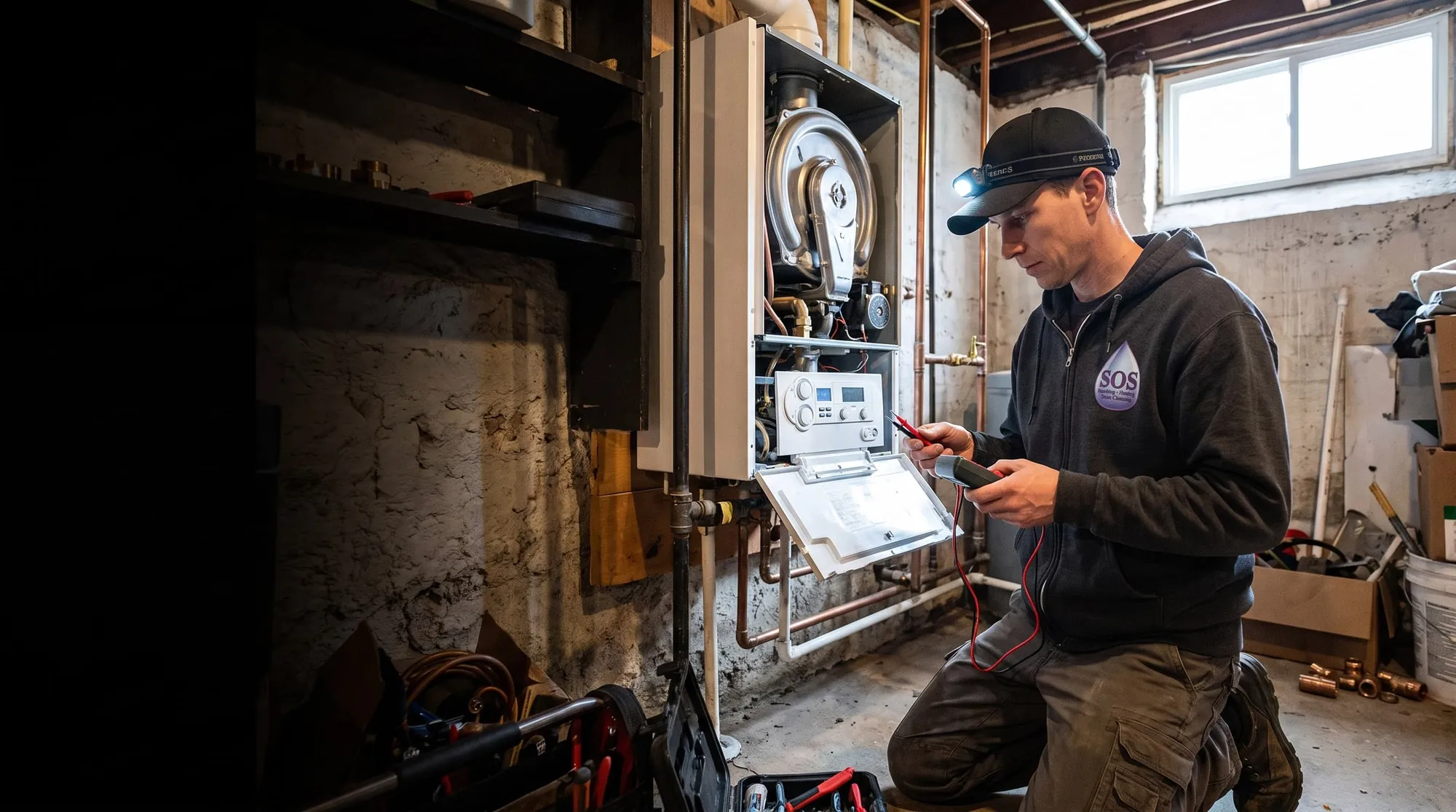
Heat · Oil to gas
The oil tank in the basement is a decision your house made decades ago.
Converting an oil-fired boiler to natural gas, with a high-efficiency or combination boiler sized to the house, the venting and gas piping done properly, the oil tank dealt with, and the 2026 Rhode Island Energy rebates applied to the price.
An oil to gas conversion starts with a fact about the road, not the boiler. Rhode Island Energy runs the gas mains, and if there is one in front of your house they will run the service line to the building and set the meter. If there is no main, the conversion is not available at any price, and we will tell you that on the phone rather than after a site visit. Much of the state's older housing is on gas already or on a gas street with an oil boiler that simply never got changed. That second case is the one this page is for.
No deliveries and no tank to run dry in February. No tank in the basement or the yard, and none of the questions a buyer asks about one. Less maintenance, because a gas burner does not soot up the way an oil burner does, and no nozzle or filter to replace. And efficiency: an older oil boiler often runs in the low to mid eighties or worse, while a modern condensing gas boiler runs above 95%, which shows up on the bill every month for the life of the unit.
Fuel prices move, and we will not pretend to predict them. What does not move is that a 95% boiler uses a lot less of whatever it burns than an 80% one.
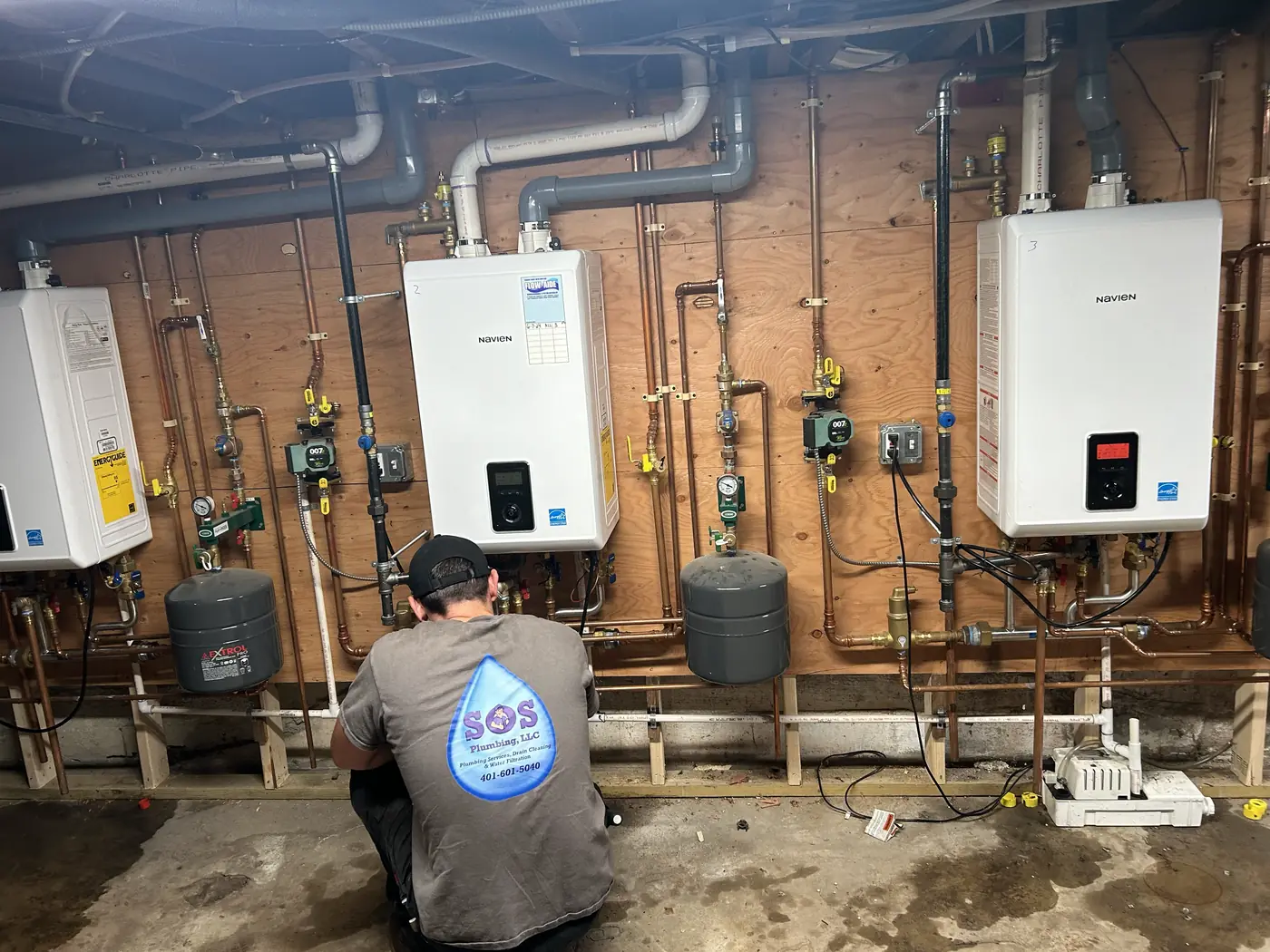
Since the boiler is being replaced anyway, a conversion is the natural moment to go to a high-efficiency condensing unit, and often to a combination boiler that supplies heat and domestic hot water from one wall-hung appliance. That retires the separate water heater as well as the oil tank, and frees the floor both were standing on. We are certified installers for Navien and Viessmann, both of which build exactly this class of unit, and for Utica and Burnham where a conventional boiler is the better fit for the house.
Rhode Island Energy's 2026 residential gas heating rebates pay $775 for a high-efficiency gas boiler at 95% AFUE or better and $950 for a combined condensing boiler and on-demand water heating unit. The application form has a box for customers converting from oil or propane, so a conversion qualifies once the gas account is active. We put the rebate figure in the quote so the number you are comparing to staying on oil is the real one. Full detail, deadlines and paperwork on our rebates page.
No gas main on the street, obviously. A house you are selling within a year or two, where the conversion cost is not recovered. Or a well-maintained oil boiler with real life left in it, where the honest advice is to keep it serviced and revisit when it fails. In those cases a good oil boiler or a repair is what we will recommend, and we will say why.
How a rescue works
No phone tree, no callback queue. Describe the problem and we dispatch the nearest tech, same-day for most calls, immediately for emergencies.
The tech diagnoses on site, walks you through options, and quotes flat pricing before any work begins. You approve, or you don't. No surprises on the invoice.
Stocked vans mean most repairs finish in one visit. We protect floors, wear boot covers, and leave the space cleaner than we found it.
Workmanship is guaranteed and every tech is licensed and insured in Rhode Island. If something isn't right, we come back. That's the whole policy.
No phone tag
Pick a service, leave a number, and a dispatcher calls you back. No account, no spam. Emergency? Skip the form: (401) 601-5040 is answered 24/7.
Signals received
"Jacob Katz always provides a timely, courteous, knowledgeable service."
"I had a saddle valve fail at 10pm and couldn't get the drip to stop at the leak. I got an instant and informative call back… Good advice, kind people, solid work and reasonable prices. This is a great company, highly recommended."
"SOS accomplished the job professionally and at the price agreed to. We were completely satisfied with their service and would recommend them without hesitation to our friends and family."
Pulled from our 4.8★ Google profile, 300+ reviews.
Good questions
It depends on the boiler chosen, the gas piping run, the venting the house needs and what happens to the oil tank, so we quote it flat after a site visit. The 2026 Rhode Island Energy rebate of $775 for a high-efficiency boiler or $950 for a combination unit comes off that number, and financing is available for the rest.
Rhode Island Energy can confirm whether a gas main runs past your property. We check this before scheduling anything, because without a main the conversion is not possible, and we would rather tell you that on the phone than after a visit.
It is drained, and then either decommissioned in place or removed, following state requirements for abandoned tanks. The fill and vent pipes outside are capped so an oil company can never mistakenly fill a tank that is no longer connected to anything.
Usually not, and that is the point. A condensing gas boiler vents through the sidewall in plastic pipe, so the chimney is retired rather than lined. If a conventional gas boiler is chosen instead, the chimney is evaluated and lined where required. Either way it is decided before the boiler is ordered.
The boiler work itself is one to two days. The long pole is Rhode Island Energy setting the service and meter, which can run several weeks depending on the street and the season. We coordinate that and sequence the work so the house is without heat for as short a time as possible.
Yes. A combination boiler replaces the water heater too and carries the larger rebate, but a heat-only condensing boiler with the existing water heater kept is a legitimate choice, especially if the water heater is young. We price both and you decide.
Available across Rhode Island
We serve every town in Rhode Island. These are the ones with their own pages, see every service area.