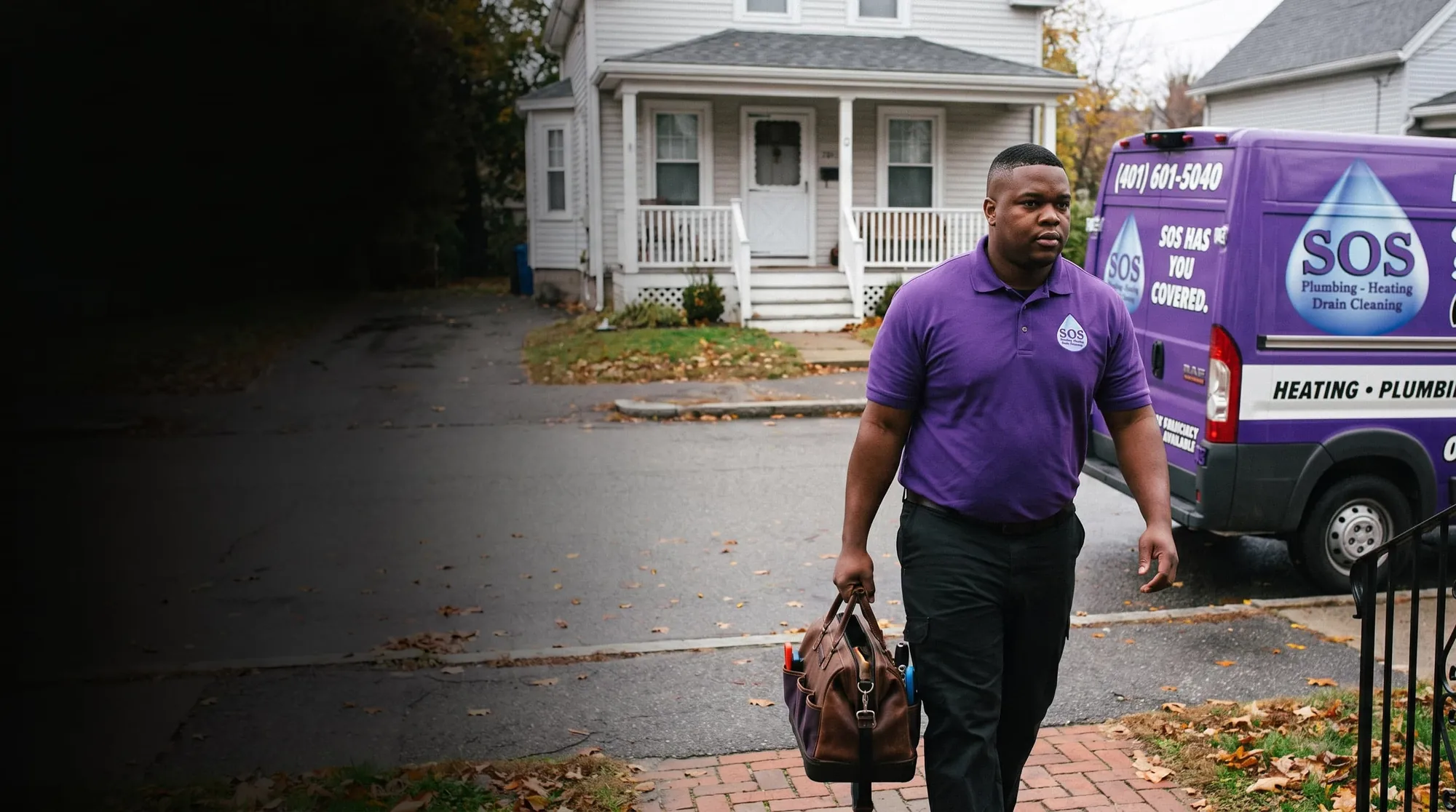
"We called SOS for a leaky fixture, and they were quick to respond. Came right out and replaced gaskets instead of the whole fixture. Another plumber quoted over $1000 before they saw what we needed… we will call them again if we ever need anything."
Water · Leak detection
A water bill that doubled is a leak that has been running for a month.
Leak Detection in Rhode Island
Finding hidden leaks in Rhode Island homes, in slabs, walls, ceilings and underground service lines, with meter tests, pressure isolation and moisture and thermal readings, so the repair opens one small hole rather than a wall.
Leak detection is a different job from leak repair
Repairing a leak you can see is straightforward. Finding one you cannot is the skill, and it decides how much of your house gets opened up to fix it. Water leak detection is the work of narrowing a problem from "somewhere in the house" to a spot the size of a hand, before anyone picks up a saw. Done well it means one small, deliberate access hole. Done badly it means exploratory demolition billed by the hour.
The signs that mean a hidden leak
- A water bill that jumped with no change in how the house is used
- The meter moving with everything off, the single most reliable test a homeowner can do
- A warm spot on a floor, which on a slab house is a hot water line leaking underneath
- Stains, bubbling paint or a soft ceiling below a bathroom or kitchen
- A musty smell or mold with no visible water
- The sound of running water when nothing is running
- A soft, wet or unusually green stripe in the lawn between the street and the house, which is the water service line
How we find it
The order matters, because each step rules out half of what is left.
- Meter test: with every fixture off, is the meter moving? If it stops when the main valve inside the house is closed, the leak is inside. If it keeps moving, it is in the service line between the street and the house.
- Pressure isolation: shutting off zones and fixtures in turn until the pressure holds, which puts the leak on one branch of the system
- Moisture readings through walls, floors and ceilings to follow the water back to where it is actually coming from, which is rarely where it shows
- Thermal imaging for hot water lines, especially under slabs, where the warm trail on the floor maps the pipe
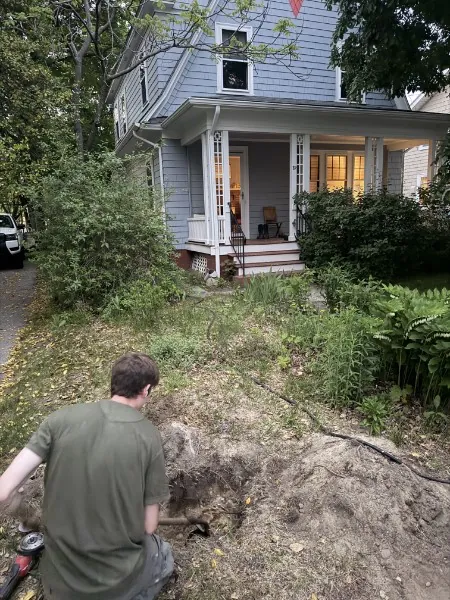
- Exterior locating for underground service lines, so an excavation is one hole in the right place rather than a trench in the wrong one
Slab leaks
Post-war ranches and split-levels across Rhode Island were plumbed in copper under the slab, and that copper is now sixty or seventy years old. A slab leak announces itself as a warm patch, a rising bill or water at the edge of a floor, and the wrong response is to start breaking concrete. We pinpoint it from above first, then open the smallest patch of slab that reaches it, or reroute the line overhead when the rest of the run is failing too.
Underground water service lines
The pipe from the street to your foundation is yours to maintain, and when it leaks the only visible sign is often a green stripe in a dry lawn or a bill nobody can explain. We locate the leak from the surface and repair or replace the line by excavation. It is the same crew and the same digging discipline as our sewer line work, applied to the supply side.
What you get
A marked location, photographs, a written finding you can hand to an insurance adjuster, and a flat quote for the repair. The two are quoted separately on purpose, so you are never paying for detection that was really a guess.

How a rescue works
From your call to fixed, in four moves.
You call. A person answers.
No phone tree, no callback queue. Describe the problem and we dispatch the nearest tech, same-day for most calls, immediately for emergencies.
Upfront price before we open a wall.
The tech diagnoses on site, walks you through options, and quotes flat pricing before any work begins. You approve, or you don't. No surprises on the invoice.
Fixed right, left clean.
Stocked vans mean most repairs finish in one visit. We protect floors, wear boot covers, and leave the space cleaner than we found it.
Backed in writing.
Workmanship is guaranteed and every tech is licensed and insured in Rhode Island. If something isn't right, we come back. That's the whole policy.
No phone tag
Tell us what's going on.
Four fields, no account, no spam, a dispatcher reads it and calls you back. Emergency? Skip the form: (401) 601-5040 is answered 24/7.
Signals received
What Rhode Islanders say after the fix.
"I had a saddle valve fail at 10pm and couldn't get the drip to stop at the leak. I got an instant and informative call back… Good advice, kind people, solid work and reasonable prices. This is a great company, highly recommended."
"SOS Plumbing gets a 5 Star review and I will be using Jacob and Nathan again. If you need a really good plumber, start here!!"
Pulled from our 4.8★ Google profile, 300+ reviews.
Good questions
Asked before every leak detection job.
How do you find a leak inside a wall?
Moisture readings, pressure isolation and thermal signatures narrow it down before we cut. The goal is one small, deliberate access hole in the right place, not exploratory demolition, and we show you the reading that put it there.
My water bill doubled but I see no water. Now what?
Check your meter with everything off. If it is moving, water is going somewhere: often a slab leak, a running toilet flapper, an irrigation line or the underground service line. We isolate which on the same visit, starting with whether the leak is inside the house or between the house and the street.
How do you know if a leak is under the slab?
The meter test puts it inside the house, pressure isolation puts it on a line that runs under the floor, and thermal imaging usually shows the warm trail if it is a hot water line. Only then does anyone consider opening concrete, and we open the smallest patch that reaches the pipe.
Can you find a leak in the underground water line?
Yes. If the meter keeps moving with the house shut off at the main valve, the leak is in the service line. We locate it from the surface so the excavation is one hole in the right place, and repair or replace the line.
Does leak detection damage my walls or floors?
It should not, and that is the point of doing it. Detection is readings and tests, not cutting. The one access hole comes at the repair stage, once the location is known, and it is as small as reaching the pipe allows.
Will my insurance cover a hidden leak?
Often the resulting damage is covered while the pipe itself is not, and policies vary. What helps most is documentation: where the leak was, what caused it, when it was found and what was done. We provide all of that in writing, formatted the way adjusters expect.
Available across Rhode Island
This service, on your street.
We serve every town in Rhode Island. These are the ones with their own pages, see every service area.